Congrats!🎉
I have just found my newest obsession. If that face isnt the cutest 😍
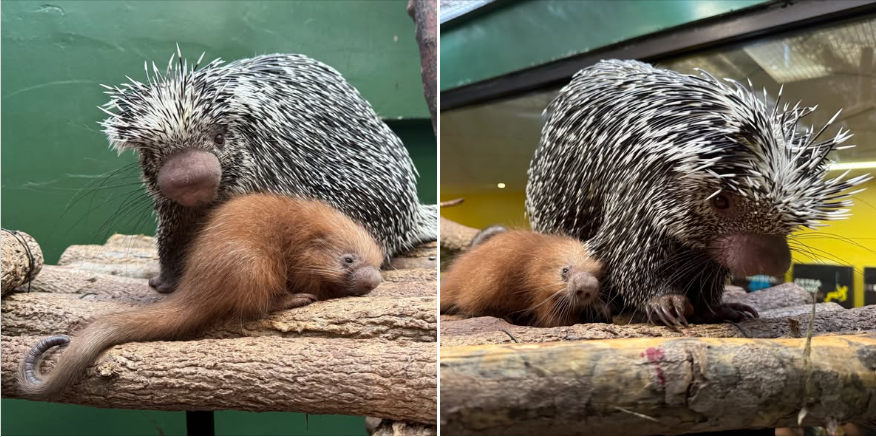
The morning of May 20, Small Mammal House keepers spotted something clinging to a branch near prehensile-tailed porcupine Beatrix: a porcupette! This is the fourth offspring for both Beatrix and her mate, Quillbur.
Like it’s three siblings before—Quillow (2023), Fofo (2022) and Quilliam (2019)—this little one belongs to the fourth generation of prehensile-tailed porcupines born at the Smithsonian’s National Zoo. Keepers are encouraged that the newborn bonded with mom and appears to be healthy and strong. The baby is currently on exhibit—and adorable!

Don’t let its fuzzy appearance fool you. At birth, a porcupette’s hair and quills are very flexible—similar to how our fingernails soften after a long soak. But within minutes of being exposed to air, they dry and harden. The porcupette’s long, rust-colored hair looks soft, but the tips are quite sharp and prickly.
It looks like super soft mink fur, not barbs.

Beneath all that fluff are small, black-and-white quills whose hooked barbs provide the porcupine with a serious defense mechanism. For now, this little cutie’s reddish-brown hair helps camouflage it in the tree canopy.
Newborn porcupettes, whether they are male or female, look anatomically similar until 6 months of age. Luckily, we don’t have to wait that long to learn this baby’s sex! Keepers used thick, protective gloves to gently pet the porcupette.
Nature is exceedingly clever.

The quills that stuck in the gloves were sent to our Center for Conservation Genomics, where scientists are running a DNA analysis for the gene linked to sex determination. In a few weeks, we’ll know if we have a boy or a girl!
H/t: Mimi Nowlin – Smithsonian