This child deserves help and recognition, because of his bravery to save our Philippine eagle.
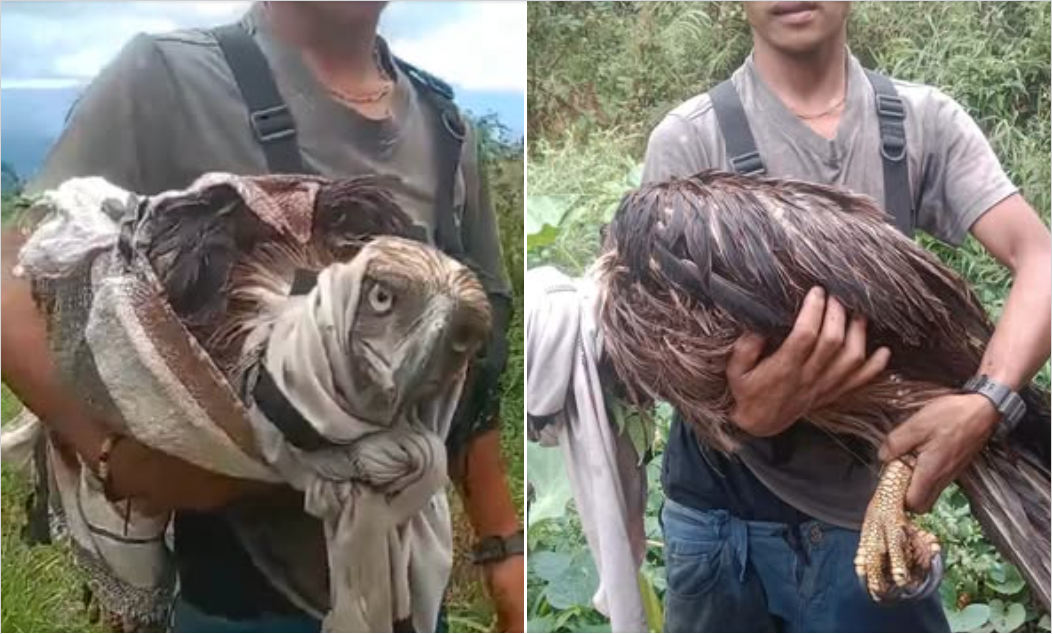
It’s rare now to see someone so brave… saving the eagle from 30 monkeys… because it’s also [da.nger.ous]… those monkeys are brave and when they realized there was no dog… they could have just turned around.
But he acted quickly and immediately saved the [po.or] bird, so he really deserves the title.
What began as an ordinary trip into the forest led Marven Linoy to a critically [in.jur.ed] eagle, a troop of more than 30 monkeys and a decision that may have saved one of the world’s rarest birds.
Marven Linoy went into the forest to pick passion fruit. Instead, he found a Philippine Eagle [fi.ght.ing] for her life.
Near the Sawaga River in Barangay Dalwangan, Malaybalay City, Marven heard unusual noises and followed them deeper into the forest. There, he saw more than 30 monkeys surrounding and [at.tack.ing] an animal on the ground.
At first, he thought it was a wild forest chicken, locally called a kalasanon nga manok. With no equipment to drive the monkeys away, Marven barked like a dog until the animals scattered.
When he moved closer, he realized the bird was an adult female Philippine Eagle. She was covered in soil, trembling, weak and unable to fly.
Marven considered leaving to call for help, but feared the monkeys might return. He stayed beside the eagle, covered her eyes with “Anunutong” fern leaves to reduce her stress and used his jacket to protect her body.
His discovery on July 3, 2026, was immediately [reported] by Junissa Valdueza Docenos of the Inhandig Tribal Multi-Purpose Cooperative. Together with Sanny Docenos, she helped coordinate the initial response.
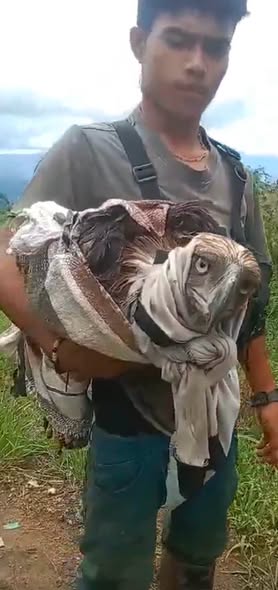
The information reached Merly Omarol Suday through the ITMPC group chat. Suday contacted Barangay Captain Royville Gabucan Pasco, the Department of Environment and Natural Resources through Ma’am Jay Veekay Arecee, and other responders.
The eagle was carefully brought to a more accessible location before being turned over to the DENR and taken to the Bukidnon Provincial Zoo.
Philippine Eagle Foundation veterinarian Dr. Danielle Pasion, senior animal keeper Dominic Tadena and senior biologist Rowell Taraya found the eagle severely [de.hydr.ated], weak and unable to fly.
Her damaged and soil-stained feathers suggested that she had been on the ground for several days. Maggots were found in wounds around her wings, tail, vent and cloaca.
The team cleaned and [di.sinfe.cted] her [wo.un.ds], removed the larvae, administered [pa.in me.dica.tion] and gave her fluids. She was later transported to Davao City and brought to Dr. Bayani Vandenbroeck of Doc Bayani’s Animal Wellness Hospital for X-rays, blood tests and further treatment.
She was named Sawaga-Dalwangan after the river and community where she was found.
Further examinations raised questions about what happened before Marven discovered her.
According to Philippine Eagle Foundation official Dr. Jayson Ibañez, X-rays revealed two [pe.lle.ts] lodged in her body, one near her right wing and another near her left thigh.
Marks [described] as possible rope [bu.rns] were also reportedly seen on her legs, raising the possibility that she had previously been restrained.
However, authorities have not determined when she was [sh.ot], how she sustained her [wo.un.ds] or who may have handled her. The findings also do not establish that the residents who found and surrendered the eagle caused her [in.jur.ies].
Marven and Junissa later returned to the rescue site, where they showed feathers, scratches on nearby trees and damaged bark. Marven also identified native trees in the area, including Ulayan, Tungog, Andalugong and Buga.
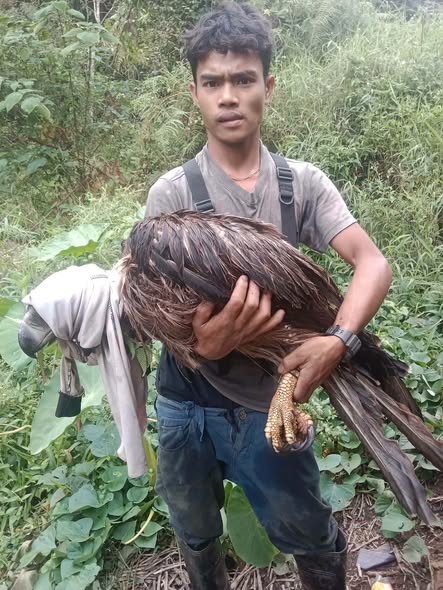
The Philippine Eagle Foundation also recognized Carmen Simene-Tangara, CENR Officer Dennis A. Juab, Jo Victoria Cristy Cruz, Marjorie Tabernero of the Malaybalay City Environment and Natural Resources Office, Barangay Captain Royville Gabucan Pasco and the personnel of Barangay Dalwangan.
Members of the Kitanglad Guard Volunteers-Kibenton, DENR, Malaybalay City Environment and Natural Resources Office, Bukidnon Provincial Zoo, Doc Bayani’s Animal Wellness Hospital, Philippine Eagle Foundation and the Inhandig Tribal Multi-Purpose Cooperative in the Daraghuyan Ancestral Domain also helped in the rescue and treatment.
Suday later appealed to the public to stop directing unsupported accusations against the Indigenous residents who rescued the eagle.
She warned that immediately treating wildlife rescuers as suspects could discourage people from reporting injured animals in the future.
Barangay Dalwangan is part of the Mount Kitanglad Range Natural Park, one of the remaining strongholds of the critically [end.ange.red] Philippine Eagle.
The Dalwangan area [reportedly] contains the species’ second-oldest documented breeding territory, monitored since 1986.
The Philippine Eagle Foundation has called for a formal investigation into Sawaga-Dalwangan’s [in.jur.ies].
With no more than an estimated 400 adult breeding pairs remaining in the wild, the [lo.ss]] of one adult female could affect the future of an entire breeding territory.
Sawaga-Dalwangan remained under intensive veterinary care as specialists continued treating her [wo.un.ds] and assessing her chances of recovery.
Marven entered the forest expecting to return with passion fruit. He came home having helped save one of the world’s rarest birds.
He had no wildlife training or rescue equipment. He only had fern leaves, a jacket, a voice loud enough to frighten the monkeys and the decision not to leave the eagle alone.
For Sawaga-Dalwangan, that decision have saved her life.
Thanks for saving the eagle, it’s good that you were there to help.
He should be given an award to encourage more individuals to perform heroic acts.
H/t: Ms. Merly Omarol Suday