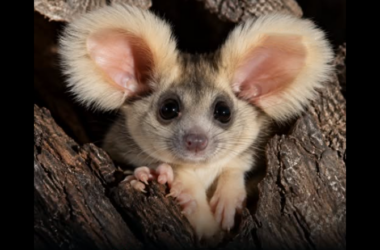
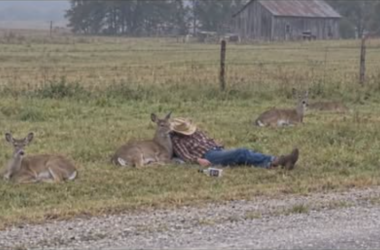
Now finally their evolution theory makes sense..
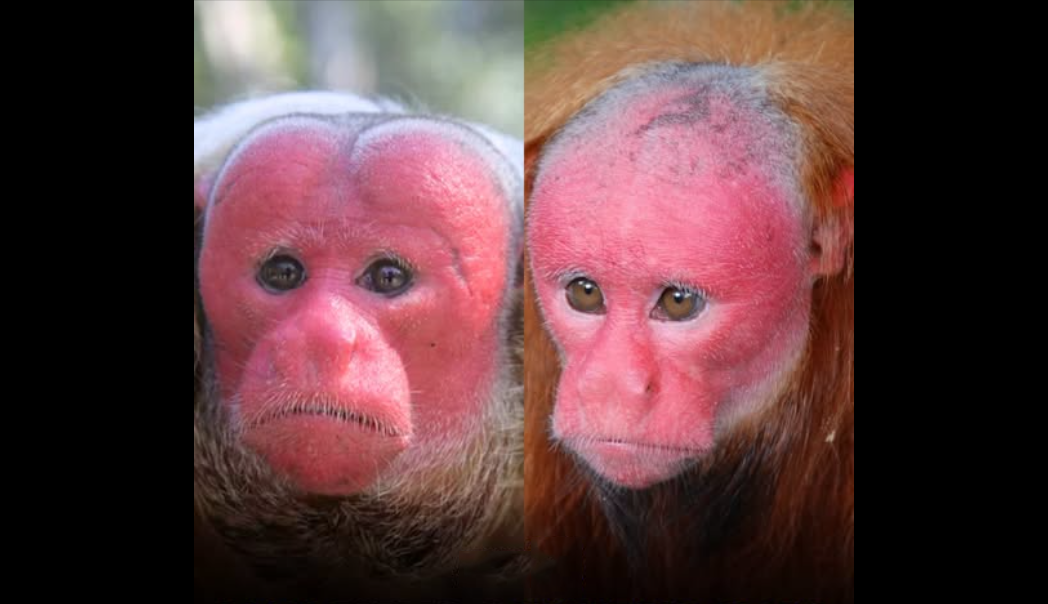
Just make the nose pointed and we’re good to go😂
Deep in the flooded forests of the Amazon, there lives a monkey with a face so bright red it looks like it has been badly [sunbu.rned]. Its head is bald, its fur is pale, and its appearance is so unusual that locals in Brazil have given it a rather unexpected nickname: macaco inglês, or “English monkey.”
The reason behind the name is both amusing and slightly embarrassing for the British. According to local legend, early English explorers who ventured into the Amazon had pale skin that turned painfully red under the scorching tropical sun. When locals encountered the strange-looking uakari, with its bald head and vivid red face, they were reminded of those sunburned foreigners. The resemblance was so memorable that the nickname endured for generations.
The animal behind this curious reputation is the uakari, a primate found only in the western Amazon, particularly in the flooded forests of Brazil and Peru. Several species exist, but the white uakari is the one most closely associated with the nickname. Its pale coat, bright red face, and almost completely bald head make it look unlike almost any other monkey.
Even its movements are unusual. Unlike many monkeys, the uakari has a remarkably short tail that cannot help it swing from branch to branch. Instead, it often travels on all fours, bounding through the forest undergrowth with surprising energy. Its movements can be so noisy that people living nearby may hear it approaching long before they catch a glimpse of it.
But the uakari’s red face is not the result of sunburn. In fact, its unusual coloring has a biological explanation. The skin on its face contains little pigment and very little fat beneath it, allowing the blood vessels underneath to show through. The result is that striking crimson color.
More surprisingly, the color may reveal something important about the monkey’s health. A vivid red face is generally associated with good health, while a paler face can indicate [i.l.lne.ss] or infection. Researchers have also linked facial redness to mate selection, with females tending to favor males whose faces display stronger red coloration.
The unusual nickname is not a recent invention, either. British naturalist Henry Walter Bates encountered uakaris during his travels in the Amazon in the 1850s and recorded the local name. Over time, the expression appeared in accounts of the region and even in nature documentaries. Yet the story has recently attracted renewed attention online, as people in Britain discovered that an Amazonian monkey had been nicknamed after their ancestors.
Reactions have been mixed. Some people find the comparison hilarious, while others question whether the explorers really looked that red. After all, the nickname comes from local legend rather than a documented account of every English visitor who entered the rainforest.
Still, the name has survived for more than a century, preserving a small piece of Amazonian folklore. And somewhere beneath the towering trees of the flooded forest, the white uakari continues to leap through the undergrowth, its brilliant red face offering a reminder of how an unusual animal, a memorable resemblance, and a little local humor can create a nickname that lasts for generations.
Now imagine naming people after animals they resemble!