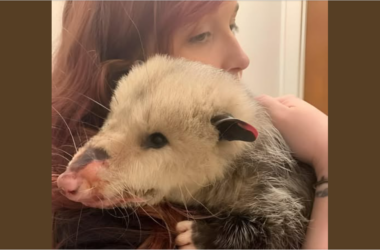
A reasonable Man suits himself for his environment.
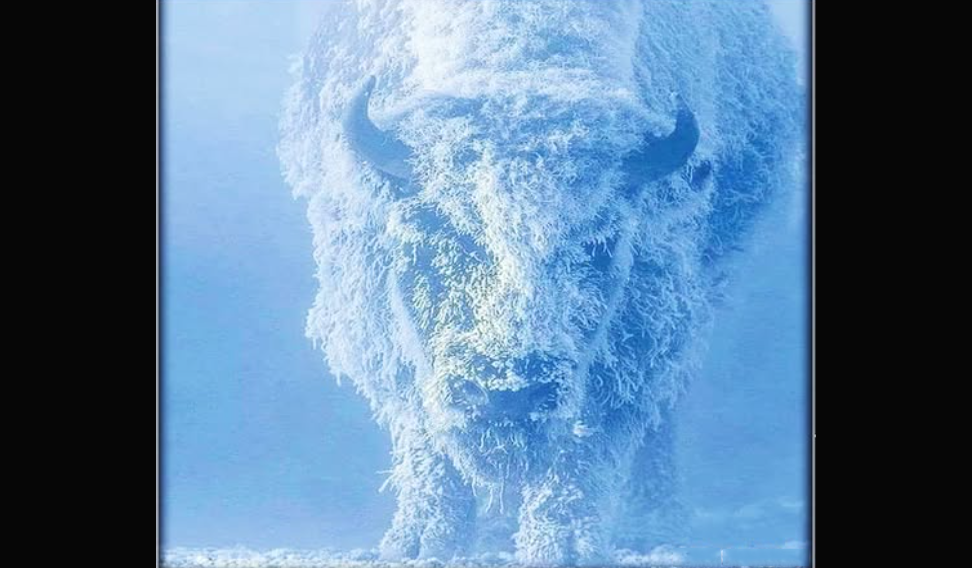
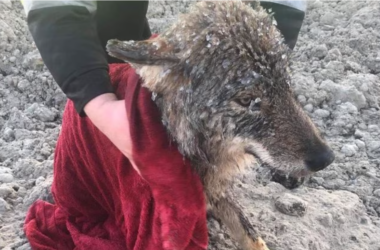
That ice on its coat act as insulation to keep it warm.
That’s what Florida people think about themselves when the temperature gets down to anything close to freezing.
The sight of a bison standing calmly in the brutal winter of Yellowstone National Park, where temperatures can plunge to 35 degrees below zero (Fahrenheit or Celsius—nearly the same at this extreme) is a powerful symbol of pure resilience. Far from suffering, these magnificent animals are perfectly adapted to thrive in some of the [ha.rshe.st] winter conditions on Earth. 🤩
The American bison is a true winter warrior, equipped with one of nature’s most effective defenses against extreme cold—a thick, double-layered coat. The outer layer is long, shaggy, and dark brown, while beneath it lies an incredibly dense, soft undercoat that acts as a powerful thermal shield.
This insulation is so efficient that very little body heat escapes. Snow and frost can pile up on a bison’s back and head without melting, creating the striking image of a living ice sculpture—and proving just how well their heat is retained.
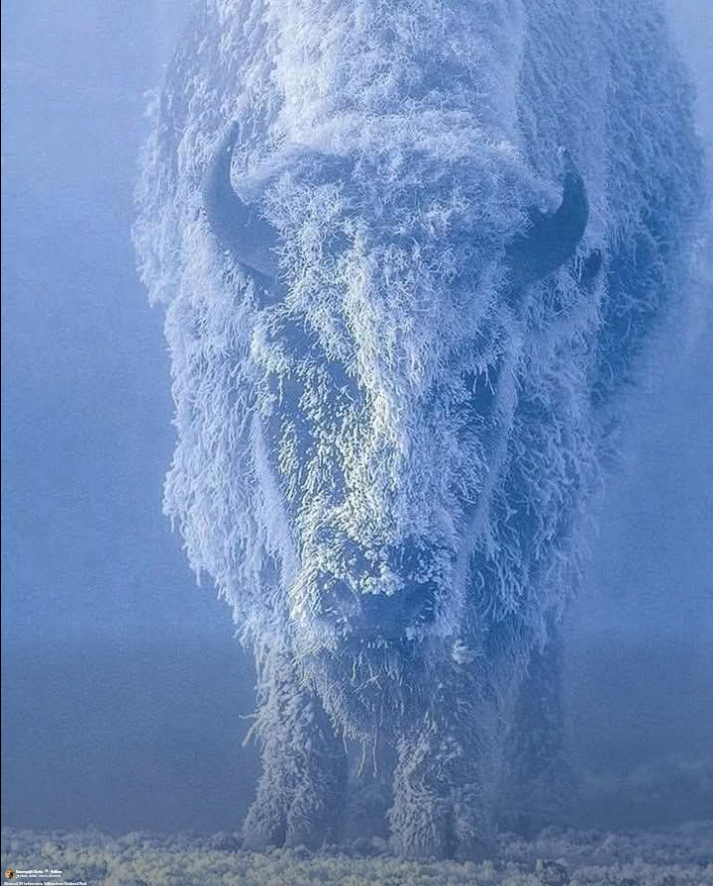
Their fur is coated with natural oils that repel moisture, helping them endure blizzards and icy sleet without their coat becoming heavy or losing its insulating power.
Beyond their fur, bison possess remarkable physical and behavioral adaptations that ensure survival in deep winter cold.
The massive hump on a bison’s back isn’t mainly for fat storage—it’s a bundle of powerful muscles that support their enormous head. With strong swings of the head and neck, bison plow through snow drifts up to four feet deep to reach the grasses hidden below.

In winter, a bison’s metabolism slows significantly to conserve energy when food is limited. They reduce unnecessary movement and can stand motionless for hours during fierce storms, conserving precious calories rather than fighting the elements.
Instead of seeking shelter, bison instinctively turn to face directly into the wind and snow. This reduces exposed surface area and reflects their fearless, time-tested survival strategy. 🙏
A bison in a Yellowstone blizzard is not a victim of winter—it is a master of it.
Is bison can survive this much cold for longer periods? What they eat during winters?